


 Those are the first longhand written medical words, under CHIEF COMPLAINT, of my historical orthopedic records. Born on June 18, 1949, I contracted polio on December 9, 1949—almost six months after my birth. Actually, my Mom always stated the date as December 10th, and she would remember best because the incident occurred two days after her birthday. Mom told the story so many times—how I woke up crying around midnight and when she lifted me out of the crib and touched my right hip, I screamed with pain. She immediately knew it was polio. So I use December 10th as the date that changed my life forever. These orthopedic medical records document the first doctor visit, observation and rehabilitation hospital stays, surgeries, the many Plaster of Paris cast removals, braces, broken bones, and then the onslaught of post-polio.
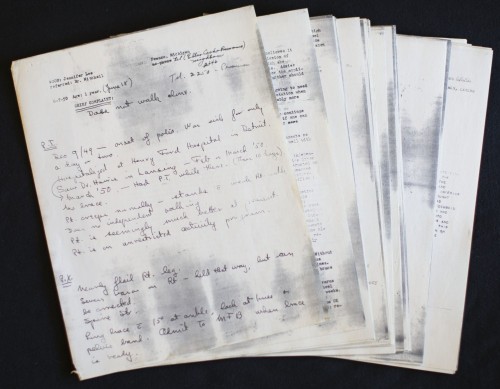
I am extremely lucky to possess these pages. The file passed from the original orthopedic doctor’s office on to three different specialists in separate practices. My last orthopedic doctor retired around 2000. By chance, I met him in a sporting goods store and learned he retired. Then I asked him who had my medical file and his reply shocked me: “Your records are stored in my barn.” Wow! Really? After decades my records end up in a horse barn!
Thankfully, he returned them to me shortly after we met. When I held them in my hands, tears welled up in my eyes, for the childhood memories I most often remember are not of playing, school, church, or family gatherings—but every single recorded incident in this file.
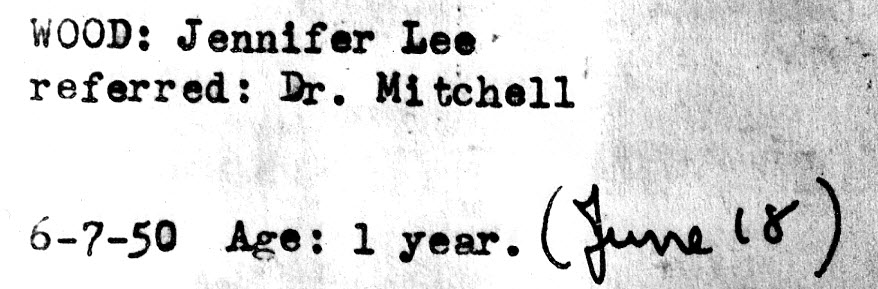
These orthopedic medical records began on June 7, 1950, and chronologically documents the various doctors and hospital stays during my first year. Mom probably rushed me to our family doctor. Then my records indicate I saw Dr. Harris in February or March, 1950. A search of historical electronic sources reveals his full name was Dr. Dean W Harris, with an office at 126 West Grand River, Lansing, Michigan. He also served on the staff at Sparrow Hospital. Dr. Harris later became Chief of Staff at Gerber Hospital in Fremont, Michigan.
Even though Dr. Harris was probably competent, he most likely wasn’t a polio expert, so I imagine Mom stated she wanted the best polio specialist. So in March 1950 I was sent to Henry Ford Hospital in downtown Detroit to see Dr. Mitchell. Mom often told me the story that she asked the doctor in a pleading voice, “How could this happen to her baby?” And how could the virus attack in December when it usually attacked during the warm summer months? She explained she kept me home that summer because of the frequent and escalating polio cases reported in the newspaper. The cases jumped from 9,514 in 1937 to over 23,000 in 1948 to 42,000 in 1949. Mom also related she kept her house very clean. But polio struck and now she really wanted to know what had she done wrong?
Dr. Mitchell didn’t know why the virus struck in December. Mom said the doctor then looked at her with a sad face and said he understood how upset she felt because his own child was stricken with polio. In spite of all his medical knowledge and experience, he could do nothing to prevent the virus from attacking his loved one. He still felt anger and despair over his powerlessness.
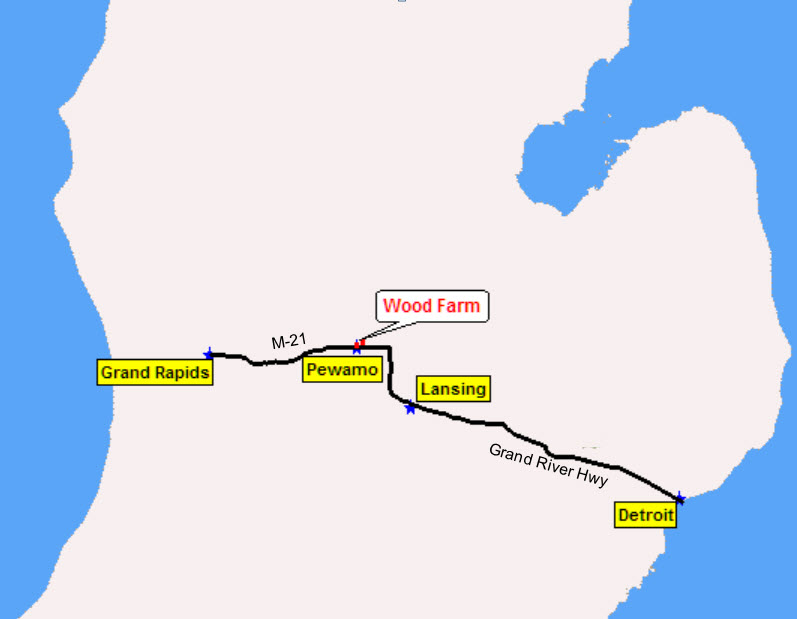
I stayed at Henry Ford Hospital for 10 days. Mom had four other children to care for—the oldest was only 10—plus all her household and farm chores. Being poor a farmer, she couldn’t afford to stay at a hotel. Before expressways, the drive to and from Detroit took more than five hours round trip on Grand River Highway, was a busy two-lane road with many stop signs. Remember, those were the days with only a few stop lights. Mom wasn’t able to visit until the10th day.
She remembered so clearly how she came into the hospital ward and looked at me in the crib. Her heart broke because my eyes were lifeless, with no expression on my face. With so many polio victims and other ill babies, my only contact with a human was during the infrequent diaper changes and the three feedings. Then Mom discovered no therapy was even done. Being German, she became very angry, picked me up out of the crib, and announced she was taking me home.
Needing Dr. Mitchell’s signature, he immediately was summoned. Mom told him she could give me much more therapy at home. She also declared that there must be polio specialists closer to home.Mom couldn’t believe her ears when the doctor informed her that, actually, the best doctor in Michigan—and even the country—was located in downtown Grand Rapids, only an hour from Pewamo. His name was Dr. George Aiken, and my first appointment was on June 7, 1950—which happened to be Mom and Dad’s 11th wedding anniversary. 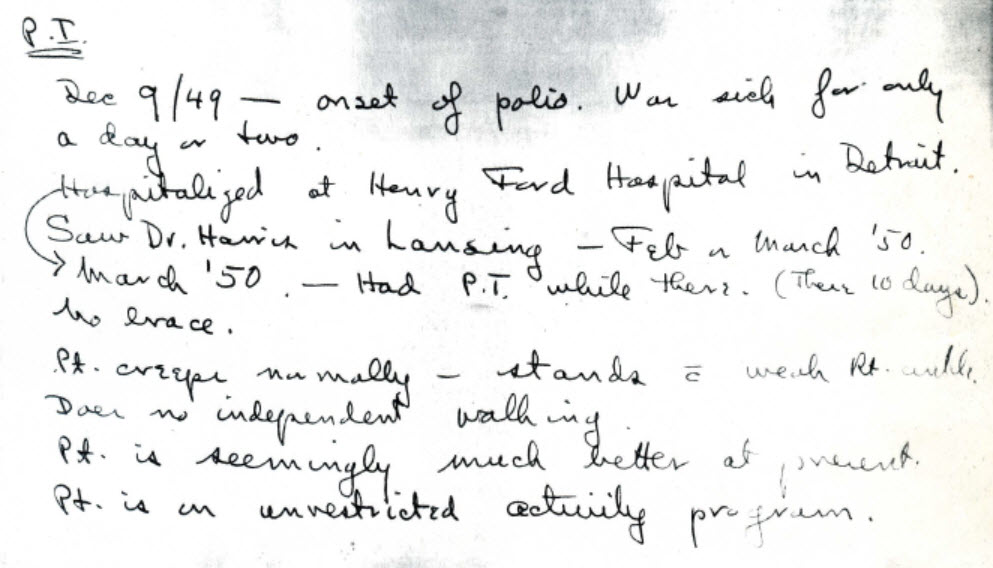
Dr. Aiken’s first notes recorded my first year’s medical history, observed the patient creeps normally, stands with a weak right ankle, does no independent walking, and does not wear a brace. Thus began the first of many, many trips to Grand Rapids.

One other fact on my record’s first page caught my attention—we didn’t have a telephone. Mom gave her father’s name, Ellis Cook, and his phone number, 2346. The entry listed him as a “neighbor,” but he lived six miles from us. I realize that our close neighbors didn’t have telephones either. My grandfather farmed, but also sold insurance and became one of the richest people in Pewamo at that time, as evidenced by his brick home with electricity, running water, indoor plumbing—and probably one of the few telephones in the area.
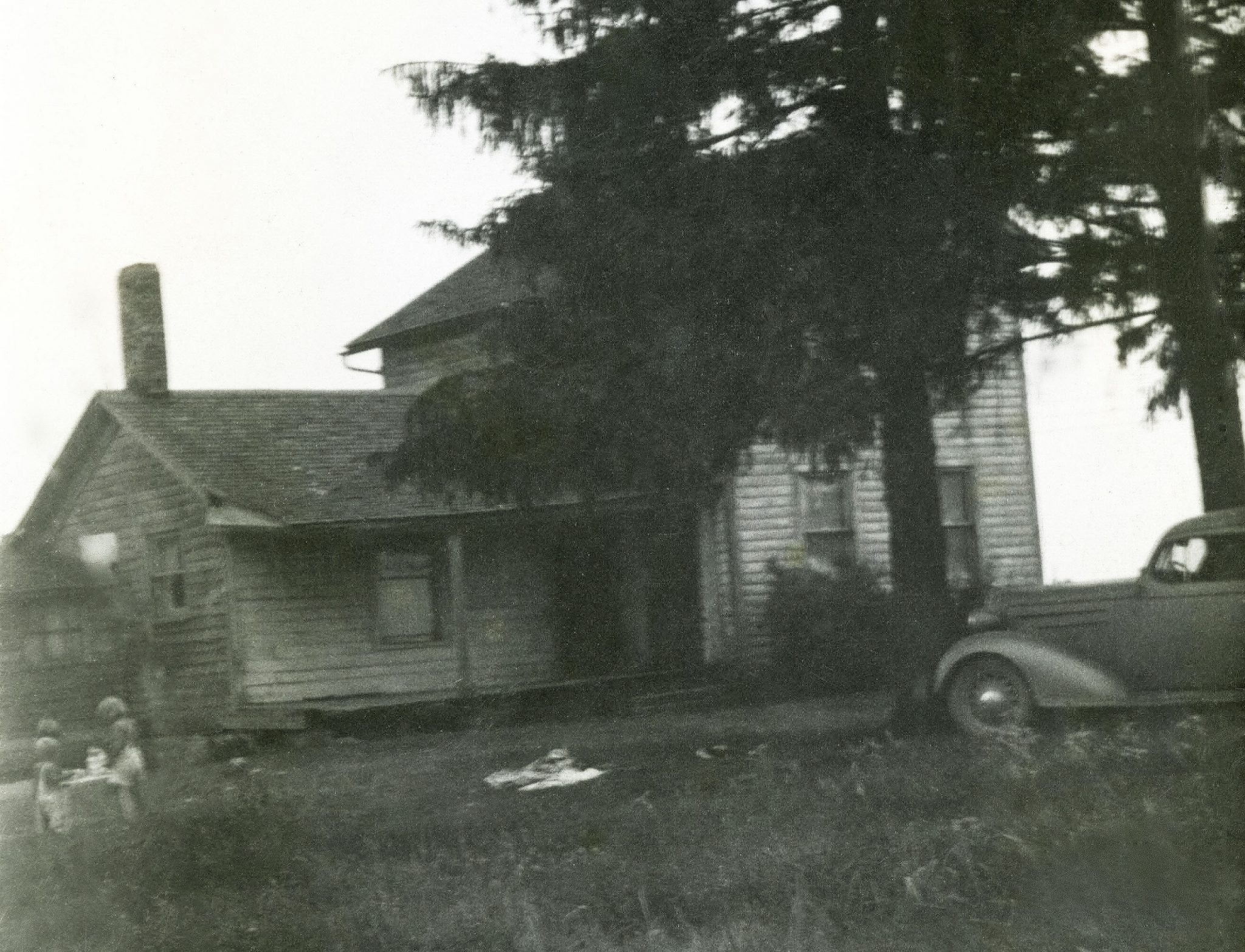
Mom married Dad in 1938. Because Dad didn’t have any money, my parents lived with his folks for almost two years. Then the bank put up for sale a farm, lost by the previous owners during the Depression. The farm was only a half mile away. So Dad and Mom took out a loan for $5,000 and bought the farm. Dad said in an interview that “We had nothing.” The house was a shack, as shown in this 1944 picture. There was no electricity, indoor running water, or a bathroom. We went to the outside pump for water and used an outhouse. The house had no insulation and heated with a steel drum Jerry-rigged for a furnace. Mom cooked on a wood burning stove. Winters were very cold, especially in mornings when the “stove went out” as we called it. The picture shows a broken porch and shingles missing from the roof. Mom went from living in a house with, at the time, modern conveniences, to a dilapidated shack. But she never complained and knew most neighbor farm houses also had few indoor amenities.
I especially love this picture because, despite all the hardships, Mom chose to capture the happy moment of my three oldest siblings having a picnic in the front yard.
The house was a shack, as shown in this 1944 picture. There was no electricity and indoor running water or bathroom. We went to the outside pump for water and used an outhouse. The house was not insulated and heated with only a steel drum Jerry-rigged for a furnace. Mom cooked on a wood burning stove. Winters were very cold, especially in mornings when the “stove went out” as we called it. The above picture shows a broken porch and shingles missing from the roof. Despite all this hardship, Mom chose to capture the happy moment of my three older siblings having a picnic in the front yard.
We didn’t get a phone until about 1955. What a fun fact to know our phone number was 2250. It was a “party line” which meant that five or six households shared. Each phone had its own special ring—ours was one long, and three short—so you knew who received a phone call. To call out, we picked up the phone, but usually someone was on the line. We then put the phone back in its cradle and kept checking every few minutes—unless someone wanted to stay on the line and listen in on the neighbor’s conversation. Mom got very angry when someone talked for too long and sometimes interrupted in her stern German voice, “I need to use the phone, please.”
My medical record began with, “Does not walk alone.” However, as I continued looking through the pages listing all those visits and procedures, I realized the figurative significance during my medical journey. Both Mom and I so appreciated what we considered medical miracles and the excellent care given by so many, many people. Thankfully, I never walked alone and am so very grateful for so many medical staff, family, and friends who helped me along the way.


 by
by 

Love your story so far.
Love to learn your story, and that of so many kids in the early 50s. I wonder where my Mom’s polio records are, or if they still exist? They might have been useful when she had post-polio.
Thanks, Nan. I so wonder what happens to so many patient records. Actually, the records wouldn’t have helped your mom. We didn’t know back then that the polio virus affected the entire body. The nerves killed resulted in other nerves doing double duty. After about 30 years, the overtasked nerves start dying off, resulting in muscle pain. It took me 20 years to find a specialist who treated the nerve muscle problem rather than the orthopedic problem. Prayers go with you.
Wow! I’m really enjoying reading this. Can’t wait for more to come!
Ah, the history of medicine will be next! Prayers go with you.
Thank you for sharing your story Aunt Jenny. I learned more about Grandma, you, and what it was like to live during a time so foreign to me.
Thanks, Sue! On the trail of Chief Pewamo today! I talked with his descendent!