Where to Begin?
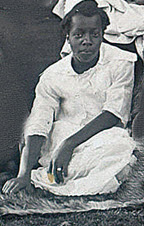
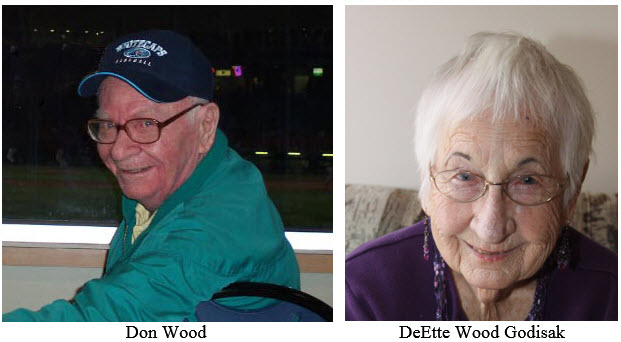
Cousin DeEtte and my dad were not only first cousins but good friends. They often saw each other as children, and when each married, continued getting together. Dee, as most of the family and close friends called her, remembered stories about the grandparents, aunts, and uncles that Dad forgot. In 2008 when I first saw the wedding picture, Dad was 94 and Dee 88. Sadly, both showed signs of dementia and stories became tangled in the telling. Still, Dee was adamant that the Gladys was the black girl sitting in the front row of the wedding picture, but couldn’t remember her last name. Dee thought she came from Iowa when her grandparents, Darwin and Hope, moved from Iowa around 1911, which I felt was highly unlikely. So if not Iowa, where did the young girl previously live? How old was Gladys then? And how did she come to live with my great grandparents in a white community? Where to begin to find the answers?
Two factors enormously helped me in the search. First, after asking about the girl, cousin DeEtte again looked through her family pictures and found another Wood gathering. She called and I immediately drove to her house. When I saw this family photo, I broadly smiled because clearly the occasion celebrated a day spent doing what almost every one of my Wood born relatives (except me) loves doing—fishing! Living in Lyons, the group that day either fished on the Grand River or on the tributary which flowed through several of their farms, the Maple River. There sat a younger Gladys, again in the front row among the children.
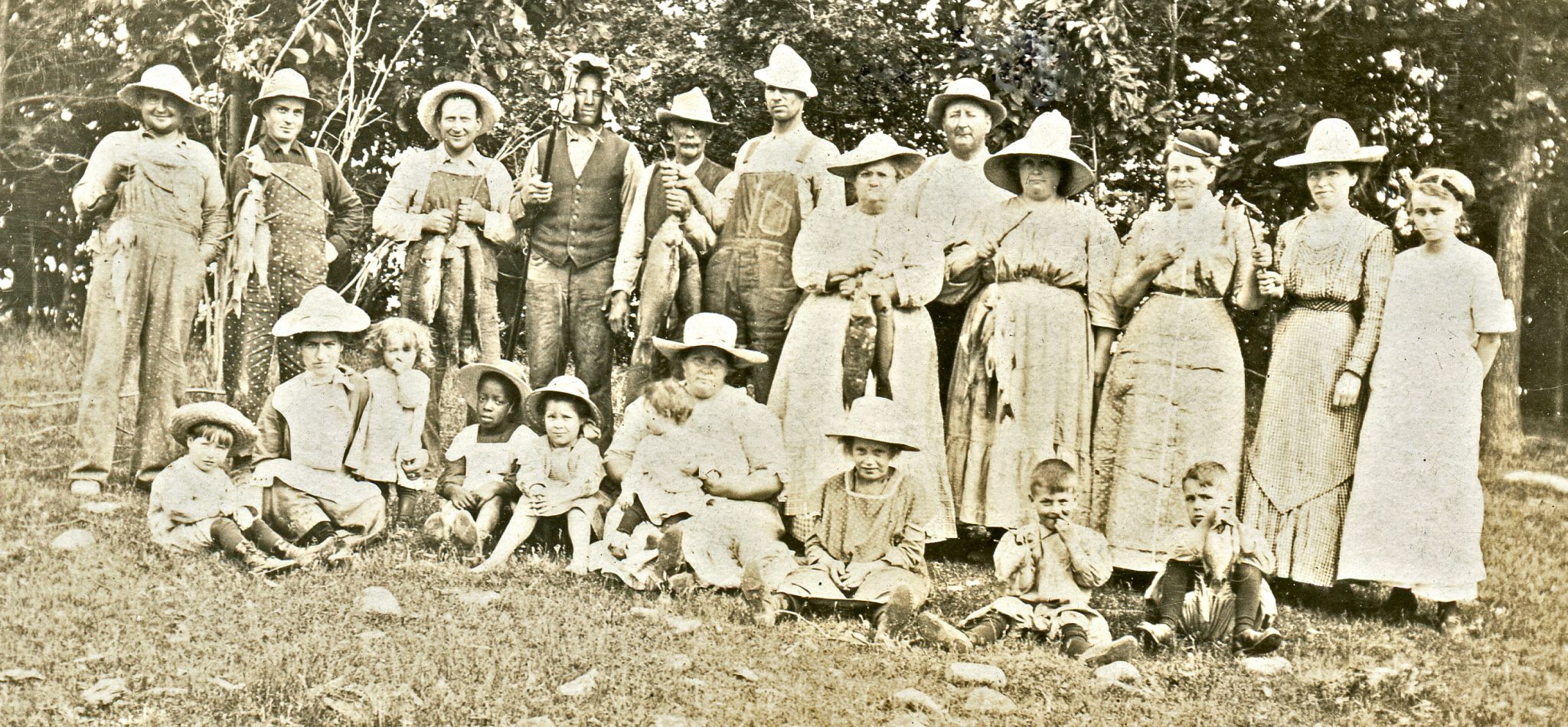
Then Dee turned the picture over and showed me the names she wrote down many decades ago. Her finger pointed to a specific name and there it was—Gladys Lacey. Knowing her last name allowed me to utilize the second factor—my over 40 years as a research librarian, including in working in the genealogy department of the Grand Rapids Public Library during the 1970s. The favorite source of anyone researching their ancestors, then and now, is the U.S. Federal Census.
Since 1790, the U.S. government has taken a nationwide population count every 10 years. Before 1850, the census listed just the name of head of household, which were primarily males or widowed women; number of free white males and females; number under or over a several age brackets; slaves owned; number of foreigners; and the town or district and county of residence. After 1850, the census listed all household members plus age as of the census day; sex; color; birthplace; occupation of males over age 15; value of real estate; whether married within the previous year.
At each 10-year census the information gathered also included house number and address; married, single, or widowed; birthplace of mother and father; if person could read or write; and highest education attained. Additional information recorded changed somewhat each decade. After 1860, slave status dropped and information collected included years married, citizenship, income, native language, date of immigration, employment status for those 14 and over, and more. A fire destroyed most of the 1890 federal census records. Personal information is kept private for 72 years and then released to the general public, thus the 1940 census data was released in 2012. The most important point to remember is that the data collected is what a person told to the census collector. Consequently, the ‘truth’ might not be accurate.
Because my great grandparents settled in Michigan after 1911, I searched the 1920 census. Several years ago I first looked at these records, but only at information relevant to Darwin and Hope Wood. Eureka! There appeared Gladys, listed immediately under my great grandparents, and the information was a treasure trove!
Her name appeared as “Lacy Gladis” and indicated that probably the census enumerator incorrectly reversed the first and name. I did make a mental note that her last name could be spelled ‘Lacey’ or ‘Lacy’ and that her first name might have an alternative spelling as well.
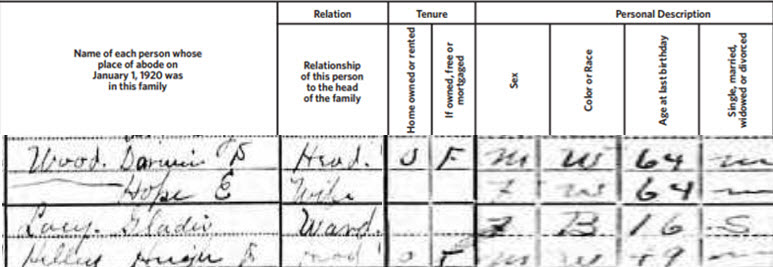
The key information listed Gladys as a ‘Ward’ of my great grandparent; female; black; and 16-years-old on the census collection day, January 22, 1920. Doing the math, Gladys was born in 1904. The census also indicated she was single.
Under the Place of Birth heading was listed ‘Michigan’ and that meant that I could focus on records in one state. However, under the father and mother’s place of birth listed ‘United States’, which meant that my great grandparents didn’t know where they were born. I then wondered if Gladys was in the room when the census enumerator asked the questions and deduced she wasn’t for surely she knew where her parents were born.
Under the “Whether able to speak English” heading, ‘yes’ was written. Then another vital piece of information was revealed: under the employment headings was listed ‘Winder’ at a ‘Chair Factory’. Hmm, did Gladys work in a factory and also help with household chores? Was she able to keep her earnings?
Knowing her age was helpful, but where did Gladys come from?


 by
by