ALL THAT GLITTERS . . .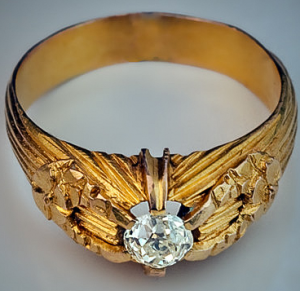
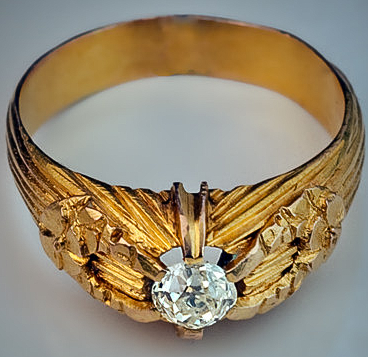
Why didn’t Gus Lacey, pay off the $10 ring—worth $250 in current dollars? The Grand Rapids Press article dated December 9, 1910 began:
“Gus Lacey, a colored citizen, couldn’t resist the glitter of gold for the flash of precious stones, no matter whether his purse will stand for it or not, according to the story told by Stone, Burgess & Co., local dealers in jewelry who claim that they sold a ring to Lacey on a contract and that after making a few payments on the circlet he grew tired of the formality and has ceased forking up the balance due them.”
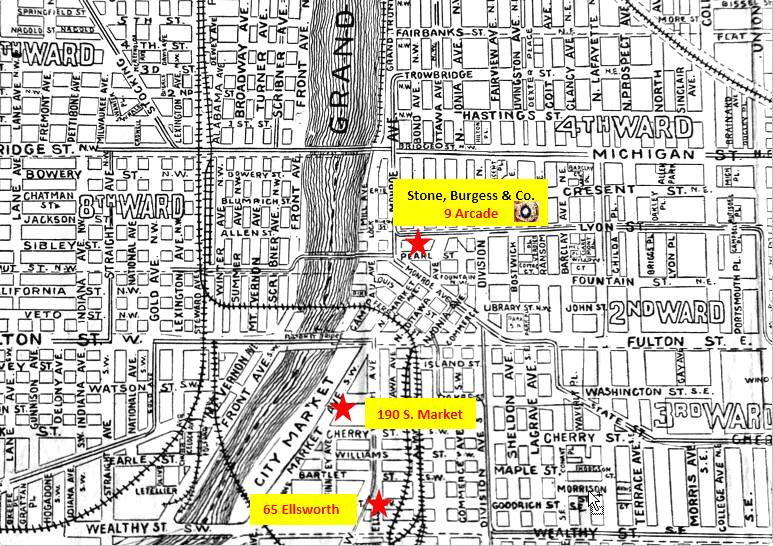
Stone, Burgess & Co. marketed themselves as “The Easy Payment Jewelers” and sold the ring on a contract that required only a $1.59 weekly remittance. Gus took possession of the ring on September 26, 1910, but only paid $3.00 of the $10 contract, resulting in his arrest in early December.
Distance wasn’t an issue. The jewelry store was located at 9 Arcade, just north of Pearl Street. In 1910 Gus lived at 65 Ellsworth and then later at 196 Market—both tenement apartment houses within walking distance, so he easily could make payments.
Did Gus have a job that earned a decent living? According to the 1910 Census, he worked as a “Tailor” for his “own-account” or was self-employed. Experienced male tailors earned a national weekly average of $11.34 for coat hand sewers on up to $20.13 for hand and machine cloth cutters. That equates to $589 and $1,446 a year respectively, much higher than the average 1910 annual national wage of $574 for all occupations. Likely the wages were lower in Grand Rapids, but even so, tailor earnings still provided enough money to make the weekly ring payments.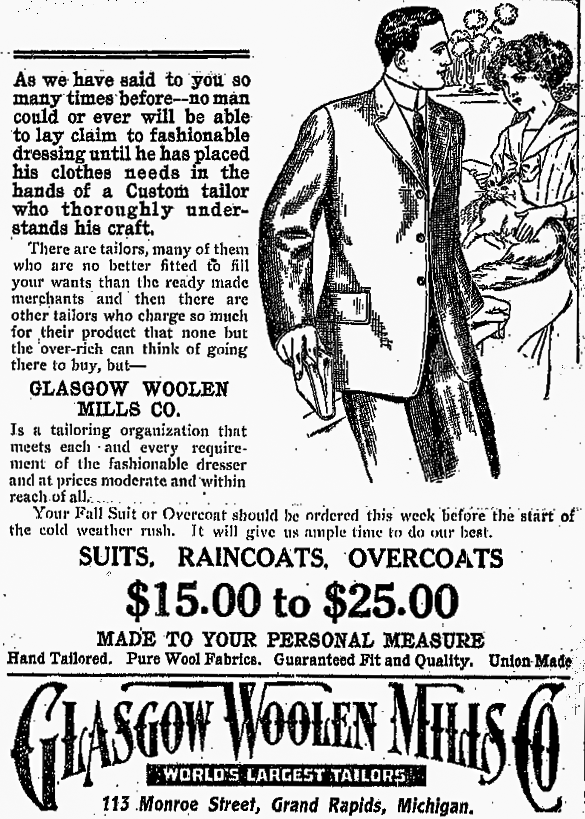
Finding work in the industry wasn’t a problem with over 137 tailors and 28 men’s stores operating in downtown Grand Rapids. While many stores carried ready-to-wear apparel, many specialized in custom-fitted suits, coats, shirts, blouses, dresses, hats, and intimate apparel. Conservatively, 1,350 people worked in the clothing and shoe industries. Occupations included tailors, dressmakers, shirt makers, cloth cutters, milliners and hat makers, and shoe cutters.
The most interesting workers were Charles Stone (age 50) who worked as a “Corset, Cutter”, and Elmer Robethen (at a very young 16) and Jeofrie [sp] Versluis (at aged 19) who worked as “Corset Maker” in a factory. The tales these men told to their male friends, probably while drinking beer at one of the many bars, would be most interesting!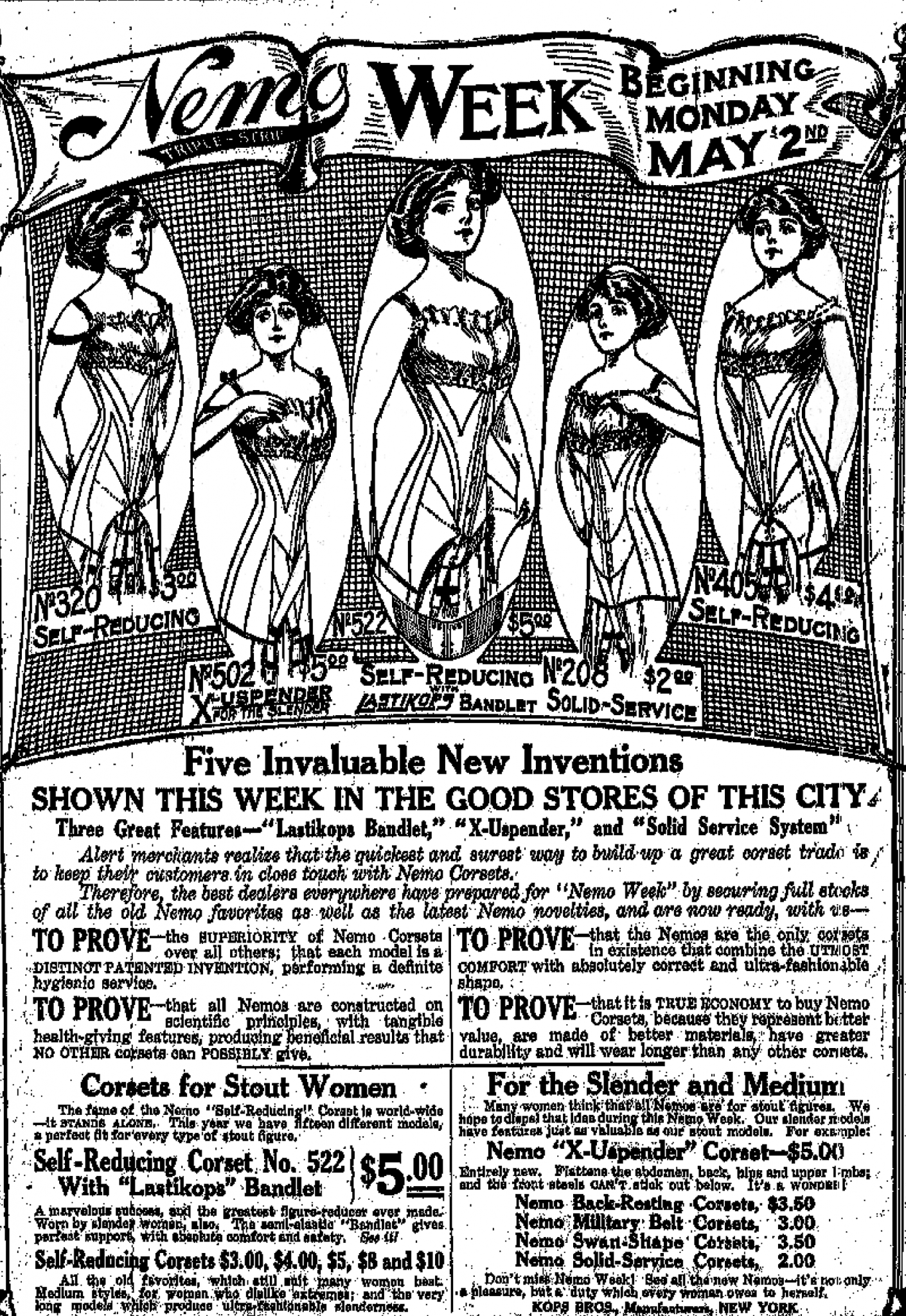
Consequently, jobs were plentiful—for white men. Doubtfully, Gus held a steady, well-paying job in any of these occupations. Few, if any, blacks worked in the clothes and tailoring industries because customers would feel repulsed to learn a “negro” touched the fabric or finished goods. More likely, Gus worked at a more menial and lower paying job.
A clarifying clue justifying his short-lived stint in the tailor industry was found in the 1910 Grand Rapids City Directory that listed Gus as a “laborer”, one who works for daily wages in jobs that typically require no skills. Perhaps Gus exaggerated his occupation to the Census enumerator. Most likely he did work in the textile industry, but in an unskilled job, such as unloading boxes. The other reason that Gus likely worked in an unskilled position is that the almost all higher paid skilled jobs were reserved for whites—no blacks need to apply.
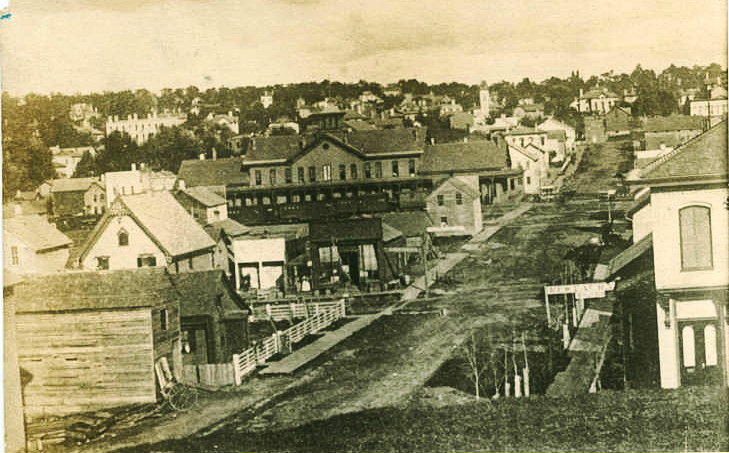
Lastly, Gus and his family lived in the most squalid Grand Rapids area—sometimes called Shantytown—where the rent was the cheapest. Landlords rarely advertised the vacant apartments, counting on the newly arrived impoverished immigrants and blacks to seek the cheapest housing.
As most day laborers, he probably lived day-to-day and earned little money to support himself, much less a wife and three children—Gladys, Arabella, and baby Maurice. Yet, Gus bought an ornate ring and embellished it, as noted in the last paragraph of the Grand Rapids Press article:
“Since getting possession of the ring, Lacey has placed some sparklers in it himself and it is now a flashy ornamentation.”
Turns out, the ring was a visible symbol of what every black person who immigrated north learned was essential for survival.
NEXT: SLAVES TO FASHION


 by
by