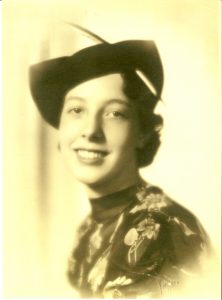
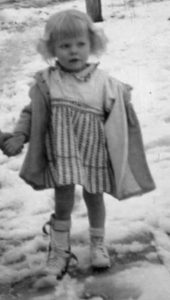
 The current race riots, polarized politics, and ethnic prejudices sadden and sickens me, especially because I often experienced the piercing condemning looks and horrific comments as a cripple.
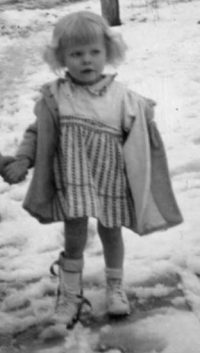
The current racial and ethnic prejudices sadden and sickens me. I have an inkling of what ,and ethnic As a child growing up on a dairy farm in Pewamo, Michigan, my introduction to prejudice began with droplets and then became a roaring gush after I moved to Grand Rapids, during the Race Riots of 1967.
Often I remark that being raised in the almost all white Catholic German community nurtured and protected me as a child. Born in June 1949, the poliovirus struck in December 1949, partially paralyzing my right leg and leaving me with a very noticeable limp.
No one noticeably stared at me or made fun of my limp because I was either related to almost everyone I met or they were friends or neighbors. Conversely, each person had a quirk or personality trait or cross to bear that we all knew about and accepted as varied colored threads of who they were.
My acceptance of different races, ethnicities, or disabilities began during my many surgeries and hospitalizations in Grand Rapids. In the 1950s and 1960s, my hospital confinement was in an all-girls ward of eleven or more beds. The boys ward was at the other end of the floor, with private rooms down the long hallway reserved for the seriously affected or injured children.
Race, ethnicity, or religion held no importance. We categorized each other by the gravity of the disability, surgery, or expected death. Regarding hospital staff, the most important criteria was their kindness and how quickly they came when we pushed the buzzer for help. One doctor needed a transfusion of happiness because he never smiled. One nurse from my village took an eternity, and then scowled at me for interrupting her. Both were white. But Miss Peacock, a young black woman, always immediately came to my assistance and with a cheerful smile. So race carried no significance.
In 1967 I moved to Grand Rapids to attend Aquinas College. My roommate was Mexican-American, a girl down the hall also limped from polio, and Nadine, a black girl, majoring in Math. The students came from all economic and ethnic environments. I immediately felt at home.
But the first day of classes, prejudice reared it’s ugly head when a young man walked by me and shouted, “A cripple, how sad.” With a huff, I spun around and replied, “As to being a cripple, yes I am. Don’t feel sorry for me, though.” He just slithered away in embarrassment.
Looking back now in my 70s, that moment ignited in me a deep understanding of being viewed as a “Less Than” person. Layers of prejudice increased being a farm girl or “Country Hick;” being a spunky woman with brains and opinions instead of a docile broad; and being dismissed and excluded because of my disability.
Yes, security guards frequently stopped me in stores, suspecting me of being a thief because I limped.
Yes, I was ignored at professional and social events because I limped and later, my weight and age.
Yes, I was yelled at for political beliefs that differed.
So, here we are, in a world more separated by “different than” instead of “more like”. Research indicates we Americans are isolating ourselves, choosing people of “sameness” via social media, where we live, how we look, and selective entertainment venues.


 by
by